Beyond Barbarossa: The Eastern Front of World War 2
This top-10 English-language World War 2 history podcast — the first in the world to focus on the full story of the Eastern Front — is now hosted on Acast. Visit Beyond Barbarossa for access, or find it on any podcasting app.







Episodes
Nov 17, 2024
Nov 17, 2024
35 min
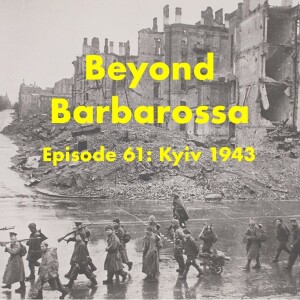
After crossing the Dnipro at Bukrin and getting bogged down by the panzers, the Red Army shifts focus northward to take the Ukrainian capital.
Map 1: The Battle of Kyiv, 1943
Source: Warfare History Network.com
Map 2: German war map of the Battle of Kyiv, 1943
Note the crossing at Ljutesch, German spelling of Lyutizh (Ukrainian) or Liutezh (Russian).
Source: Alchetron, the Free Social Encyclopedia
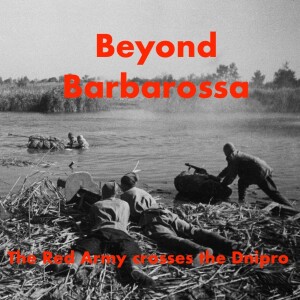
Photo 1: Crossing the Dnipro
Soviet sappers building a raft to cross the Dnipro. The sign reads, in Russian, "To Kiev!" The soldier in the foreground appears to be looking up at approaching aircraft.
Photo 2: Pavel Rybalko, commander of the Third Guards Tank Army
Photo 3: Kirill Moskalenko, commander of the 38th Army during the second Battle of Kyiv
Photo 4: Kyiv after recapture by the Red Army
Links:
The attack on Stalingrad: Episode 31
Nov 10, 2024
Nov 10, 2024
8 min
In honour of Remembrance Day, 11 November 2024, this is a special episode available to all.
A reading from Army of Worn Soles: Volume 1 of The Eastern Front Trilogy.
Available exclusively on Amazon.
Nov 3, 2024
Nov 3, 2024
31 min
It's hard to believe we've reached the 60th episode!
This is a big one: the Red Army reaches, and crosses the German East Wall along the Dnipro River in Ukraine. At a cost, of course. Let me know what you think.
Crossing the Dnipro
Map 2: The Bukrin Bend
Sources:
Prit Buttar, Retribution: The Soviet Reconquest of Central Ukraine, 1943. Osford, UK: Osprey Publishing, 2020.
Evan Mawdsley, Thunder in the East: The Nazi-Soviet War, 1941–1945. London: Bloomsbury Academic, 2016.
Anthony Tucker-Jones, Slaughter on the Eastern Front: Hitler and Stalin’s War 1941–1945. Stroud, Gloucestershire, UK: The History Press, 2017

Oct 21, 2024
Oct 21, 2024
38 min
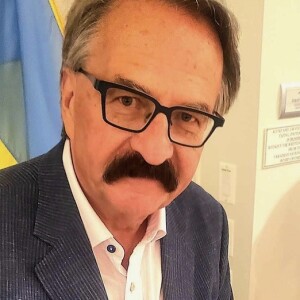
Dr. Lubomyr Luciuk of the Royal Military College of Canada and University of Toronto returns to describe the reality for eastern European people under occupation during the Second World, and draws the line from then to today.
Latest book:
Enemy Archives: Soviet Counterinsurgency Operations and the Ukrainian Nationalist Movement – Selections from the Secret Police Archives
Montreal and Kingston: McGill-Queen's University Press, 2023.
Available from Amazon and McGill-Queen's University Press
Oct 13, 2024
Oct 13, 2024
37 min
Professor of political geography at the Royal Military College of Canada and Senior Research Fellow of the Chair of Ukrainian Studies at the University of Toronto, shares his knowledge and insight into the experience of Ukraine under occupation by nazi and Soviet forces during the Second World War.
Map: Ukrainian lands during World War II
Source: Ukraine: A Historical Atlas, by Paul Robert Magosci and Geoffrey Matthews
Image 1: Dr. Luciuk's latest publication, Enemy Archives.
With Volodymyr Viatrovych. Available from Amazon and McGill-Queen's University Press.
Image 2: An UPA unit in the Carpathian Mountains collecting intelligence.
Image 3: Galicia Division machine gun unit at the Battle of Brody
Sep 30, 2024
Sep 30, 2024
40 min
Smolensk has a war history that is far more significant than its size would suggest. In September 1943, it was a key to Soviet Red Army strategy, and for the German defence.
The best English-language podcast for staying up to date on the war in Ukraine is Ukraine: The Latest from the Daily Telegraph. Its creator and executive producer was David Knowles, who passed away unexpectedly in September.
My condolences and sympathies to Mr. Knowles' family, friends, co-workers and colleagues.
Map 1: Battle of Smolensk, 1943
Map 2: Operation Suvorov
Map 2: Smolensk region
This gives you an idea of where the smaller towns are in relation to Smolensk.
Photo 1: Gen. Yeremenko (right) with Nikita Khrushchev (left) during the Battle of Stalingrad.
Photo 2: Yeremenko in about 1970
Photo 3: Gen. Vasily Sokolovsky in 1946
Sources:
Antony Beevor, The Second World War. London, UK: Little, Brown and Co., 2012.
Robert Forczyk, Smolensk 1943: The Red Army's Relentless Advance. Oxford, UK: Osprey Publishing, 2019.
Evan Mawdsley, Thunder in the East: The Nazi-Soviet War, 1941–1945. London: Bloomsbury Academic, 2016.
Anthony Tucker-Jones, Slaughter on the Eastern Front: Hitler and Stalin’s War 1941–1945. Stroud, Gloucestershire, UK: The History Press, 2017
Wikipedia: https://en.wikipedia.org/wiki/Smolensk_operation.
Sep 2, 2024
Sep 2, 2024
30 min
After the Battle of Kursk, Stalin and the Stavka set their sights on recapturing Smolensk, and farther south, the wealth of the Donbas and eastern Ukraine.
Map 1: The Chernihiv-Poltava Offensive
Map 2: The Red Army perspective
I guess you have to be a Red Army officer to understand this one.
Photos:
Ivan Konev, Marshal of the Soviet Union in 1945
General Nikolai Vatutin, Commander of the Voronezh Front, 1943
Konstantin Rokossovsky, Marshal of the USSR.

Aug 18, 2024
Aug 18, 2024
40 min
When Germany attacked Kursk in 1943, they found an enemy that had prepared a complex strategy, and assembled immense forces poised to act as soon as the German attacks stalled. This strategy began with three operations named for three Russian generals from history: Kutuzov, Rumyantsev, and Suvorov — the practice for Operation Bagration.
Map 1: Operation Kutuzov and revenge for Kursk
Map 2: Operation Rumyantsev and the Fourth Battle of Kursk
Map 3: Operation Suvorov, the liberation of Smolensk
Aug 5, 2024
Aug 5, 2024
31 min
This was armoured warfare at its most brutal, with tanks slugging it out at point-blank range. The tanks were as close as 10–15m. Once hit, many of the crews had little chance of bailing out and were splattered all over the insides of their tanks. Those who did try to escape their blazing tanks were mown down and their lifeless bodies left obscenely charred and shrivelled.
Map 1: The Kursk Salient
Map 2: The battle of Kursk — the southern sector
Map 3: The northern sector
Map 4: Another look at the battle of Prokhorovka
Sources:
Ian Baxter, Kursk 1943: Last German Offensive in the East. Havertown, PA: Casemate Publihsers (US), 2019.
Antony Beevor, The Second World War. London, UK: Little, Brown and Co., 2012.
Robin Cross, Citadel: The Battle of Kursk. UK: Lume Books, 2018.
Evan Mawdsley, Thunder in the East: The Nazi-Soviet War, 1941–1945. London: Bloomsbury Academic, 2016.
Anthony Tucker-Jones, Slaughter on the Eastern Front: Hitler and Stalin’s War 1941–1945. Stroud, Gloucestershire, UK: The History Press, 2017
Wikipedia: The Battle of Kursk.
Katyusha sound effect by Sound Effect by kuiycb from Pixabay
Some tank sound effects by Dennis from Pixabay
Jul 22, 2024
Jul 22, 2024
38 min
The iconic battle on the Kursk salient in July 1943 builds into the greatest confrontation between armoured forces ever — and a four-part series on Beyond Barbarossa.
Map 1: The Kursk salient, 5 to 11 July 1943
Map 2: The northern sector
Source: OnWar.com
Map 3: The southern sector
Sources:
Ian Baxter, Kursk 1943: Last German Offensive in the East. Haverstown, PA, USA: Casemate Publishers (US), 2019.
Antony Beevor, The Second World War. London, UK: Little, Brown and Co., 2012.
Robin Cook, Citadel: The Battle of Kursk. London, UK: Lume Books, 2018.
Evan Mawdsley, Thunder in the East: The Nazi-Soviet War, 1941–1945. London: Bloomsbury Academic, 2016.
Anthony Tucker-Jones, Slaughter on the Eastern Front: Hitler and Stalin’s War 1941–1945. Stroud, Gloucestershire, UK: The History Press, 2017
Wikipedia: The Battle of Kursk.
Jul 18, 2024
Jul 18, 2024
45 min
(Originally posted 22 June 2024)
Three seasons! 51 episodes!
This season begins with a catch-up on the Eastern Front, and the planning that led to the biggest battle in the history of warfare: Operation Zitadelle and the Battle of Kursk.
Map: The Kursk salient, spring 1943
Source: Wikipedia
Production and loss tables
Table 1: Comparative armaments production, January 1941 – December 1942
1941
1942
Germany
USSR
Germany
USSR
Rifles
1,359.000
2,421,000
1,370,000
4,049,000
Machine guns
96,000
149,000
117,000
356,000
Artillery
3,800
41,000
41,000
128,000
Tanks + self-propelled guns
8,400
6,600
6,200
24,700
Combat aircraft
12,400
11,600
21,700
German and Soviet war production. 1942–1944 (thousands of units)
1942
1943
1944
Germany
USSR
Germany
USSR
Germany
USSR
RIfles + submachine guns
1,602
4,619
2,509
4,801
3,085
3,006
Machine guns
117
356
263
458
509
439
Artillery
41
128
74
130
148
122
Tanks + self-propelled guns
6
24
11
24
18
29
Combat aircraft
12
22
19
30
34
33
Soviet tank and self-propelled gun losses
1941
1942
1943
1944
1945
Tanks and self-propelled guns available
28,200
35,700
47,900
59,100
48,900
Losses
Heavy tanks
900
1,200
1,300
900
900
Medium tanks
2,300
6,600
14,700
13,800
7,500
Light tanks
17,300
7,200
6,400
2,300
300
Self-propelled guns
0
100
1,100
6,800
5,000
Source: Mawdsley, Thunder in the East, 2016
Images:
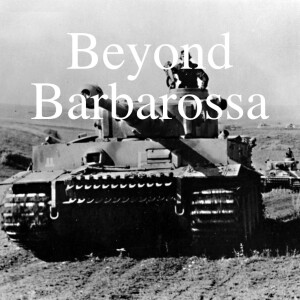
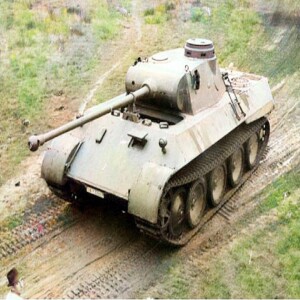
The German Tiger tank,Panzerkampfwagen VI Tiger Ausf. E
Tiger tank in Kharkiv, 1943
The German Panther tank, Panzerkampfwagen V Panther
Source: Wikipedia.
Sources:
Antony Beevor, The Second World War. London, UK: Little, Brown and Co., 2012.
Evan Mawdsley, Thunder in the East: The Nazi-Soviet War, 1941–1945. London: Bloomsbury Academic, 2016.
Anthony Tucker-Jones, Slaughter on the Eastern Front: Hitler and Stalin’s War 1941–1945. Stroud, Gloucestershire, UK: The History Press, 2017
Wikipedia: The Battle of Kursk.
May 21, 2024
May 21, 2024
40 min
For this special episode, a special treat for listeners: new theme music by composer Nicolas Bury.
At the mid-point of the fighting on the Eastern Front of World War II, it's a good time to take a look back at what's happened in the USSR and around the world.
Map 1: Operation Barbarossa to Operation Typhoon
Map 2: Operation Blue

May 6, 2024
May 6, 2024
33 min
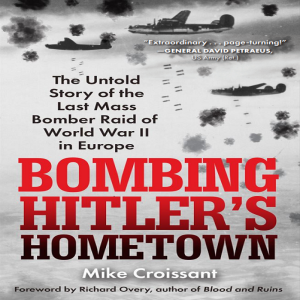
On 25 April 1945, 700 bombers and fighters of the U.S. 15th Air Force raided Linz, Germany, the town where Adolf Hitler grew up. Although neither the air crews nor the people of Linz could know it, it would be the last major Allied air raid of the Second World War. And one of the costliest in terms of U.S. casualties.
Mike Croissant's uncle Ellsworth Croissant was one of the bombardiers on that air raid. That connection led the retired CIA analyst to write a book about it: Bombing Hitler's Hometown: The Untold Story of the Last Mass Bomber Raid of World War II in Europe.
It's a very personal story that brings the reader onto the airplanes. Author Mike Croissant tells us about the raid, its aftermath, the people there, and how he came to write it.
You can read my review of the book on my blog, https://writtenword.ca/2024/04/the-last-major-air-raid-of-world-war-ii/.
You can get the book in electronic and hardcover formats from Kensington Books.
Apr 7, 2024
Apr 7, 2024
27 min
Author Mike Croissant describes the family connection that inspired his research into the last mass bombing raid of the Second World War in Europe.
His book, Bombing HItler's Hometown: The Untold Story of the Last Mass Bomber Raid of World War II in Europe, was published in March. It's available in better bookstores and through online e-tailers through Kensington Publishing.
Apr 7, 2024
Apr 7, 2024
38 min
Mussolini was not happy about being in the Axis by 1943. And Stalin refused to attend the Casablanca Conference with Churchill and Roosevelt. Meetings of the summit and other senior leaders of the Axis and Allied powers through the war show the evolution of each side's war aims between 1939 and 1945.
Map: The Kursk salient, spring 1943
Image 1: Roosevelt and Churchill aboard the HMS Prince of Wales at the Argentia Conference, August 1941.
Seated: President Franklin D. Roosevelt (left) and Prime Minister Winston Churchill. Standing directly behind them: Admiral Ernest J. King, USN; General George C. Marshall, U.S. Army; General Sir John Dill, British Army; Admiral Harold R. Stark, USN; and Admiral Sir Dudley Pound, RN. At rear: Harry Hopkins talking with W. Averell Harriman. Source: Wikimedia Commons.
Image 2: The Second Moscow Conference, August 1942
Left to right: UK Prime Minister Winston Churchill, USSR Premier Josef Stalin, and W. Averrell Harriman, representing President Franklin D. Roosevelt. Office of War Information Photograph (Wikimedia Commons).
Sources:
Antony Beevor, The Second World War. London, UK: Little, Brown and Co., 2012.
Evan Mawdsley, Thunder in the East: The Nazi-Soviet War 1941–1945. London: Bloomsbury Academic, 2016.
Sean McMeekin, Stalin's War. New York: Basic Books, 2021.
Anthony Tucker-Jones, Slaughter on the Eastern Front: Hitler and Stalin’s War 1941–1945. Stroud, Gloucestershire, UK: The History Press, 2017
Wikipedia: various pages.
Sound effects by Zapsplat.
Mar 24, 2024
Mar 24, 2024
37 min
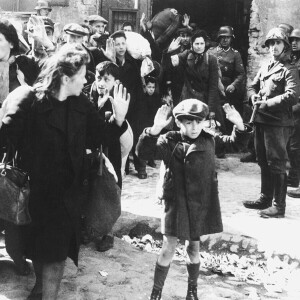
In April 1943, Jewish people forced into the grossly overcrowded ghetto in Warsaw rose up against the nazis, killing hundreds of SS soldiers. The Warsaw Ghetto Uprising failed, but its memory lives on.
SS members force Jewish people out of shelters for deportation to death camps, spring, 1943. Source: Wikimedia Commons.
A map of the Warsaw Ghetto, the area nazi oppressors forced Jewish people to remain in.
SS-Brigadeführer Jürgen Stroop (center), commanded of the SS brigade that destroyed the Warsaw Ghetto.
In April and May, the SS systematically destroyed every building in the Warsaw Ghetto.
SS soldiers continuing to destroy the Warsaw Ghetto, May 1943. Image source: Wikimedia Commons.
"Waves of stone, crushed bricks, a sea of brick. There isn’t a single wall intact — the beast’s anger was terrible." — Soviet journalist Vasily Grossman, Warsaw, 1945.
Mar 10, 2024
Mar 10, 2024
36 min
After their stunning, bloody defeat at Stalingrad, the Germans withdrew west to the Donets River in Ukraine, and the Red Army swept ahead as much as 800 km. But the Germans were still a potent force, and in March 1943, were ready to retake Kharkiv.
Map 1: The counter-attack in the Donbas
Map 2: The advances on Kharkiv
Map 3: Withdrawal from the Rzhev salient
Maps 4 and 5: The front in March 1943
Feb 25, 2024
Feb 25, 2024
26 min
After the 6th Army's surrender at Stalingrad, rapid, far-ranging mobility returns to the war on the Eastern Front, as German and Soviet forces advance and retreat hundreds of kilometres.
Map 1: The Kuban Bridgehead
Map 2: Operation Star
Map 3: Von Manstein's counter-offensive
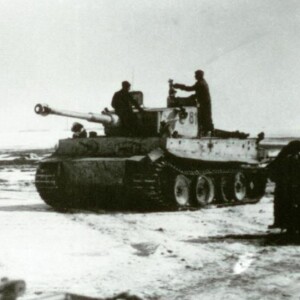
A Tiger tank near Kharkiv, 1943
Source: Pinterest.
Feb 11, 2024
Feb 11, 2024
52 min
The Red Army finally scores two major victories in January 1943 — in the two cities where it mattered most.
The surrender of the Sixth Army:
https://stalingrad.net/german-hq/surrender/surrender.htm
Map 1: End of the battle of Stalingrad
Map 2: Operation Iskra
Source: Wikipedia
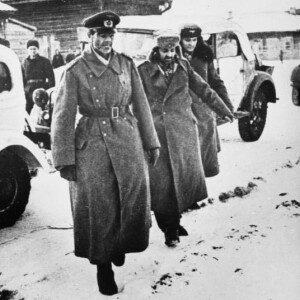
Photos: The surrender at Stalingrad
Left to right: Field Marshal F. Paulus, C-in-C, 6th Army; Gen. W. Schmidt, Chief of Staff; Col. Adam, Paulus' adjutant.
General Konstantin Rokossovsky, commander of the Don Front that captured the 6th Army in Stalingrad.
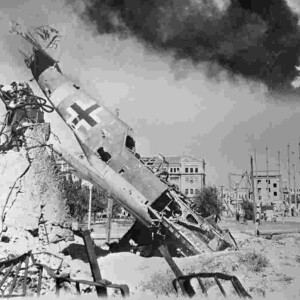
The aftermath in Stalingrad. Source: Wikimedia Commons.
Jan 28, 2024
Jan 28, 2024
51 min
The Germans in the Stalingrad cauldron reject the Soviets' final offer of surrender. The Red Army responds by crushing the cauldron.
Map 1: The end of the Kessel
Source: Military History Now
The ultimatum to Stalingrad:
https://www.stalingrad.net/russian-hq/the-russian-ultimatum/rusultimatum.html
Images:
3-engine German transport plane lands at Pitomnik airfield.
Red Army soldiers attack in the ruins of Stalingrad.
Sources:
Antony Beevor, Stalingrad: The Fateful Siege 1942–1943. Penguin Books, 1998.
Antony Beevor, The Second World War. London, UK: Little, Brown and Co., 2012.
William Craig, Enemy at the Gates: The Battle for Stalingrad. Old Saybrook, CT, USA: Konecky & Konecky, 1973.
Anthony Tucker-Jones, Slaughter on the Eastern Front: Hitler and Stalin’s War 1941–1945. Stroud, Gloucestershire, UK: The History Press, 2017
Sound effects by Zapsplat.
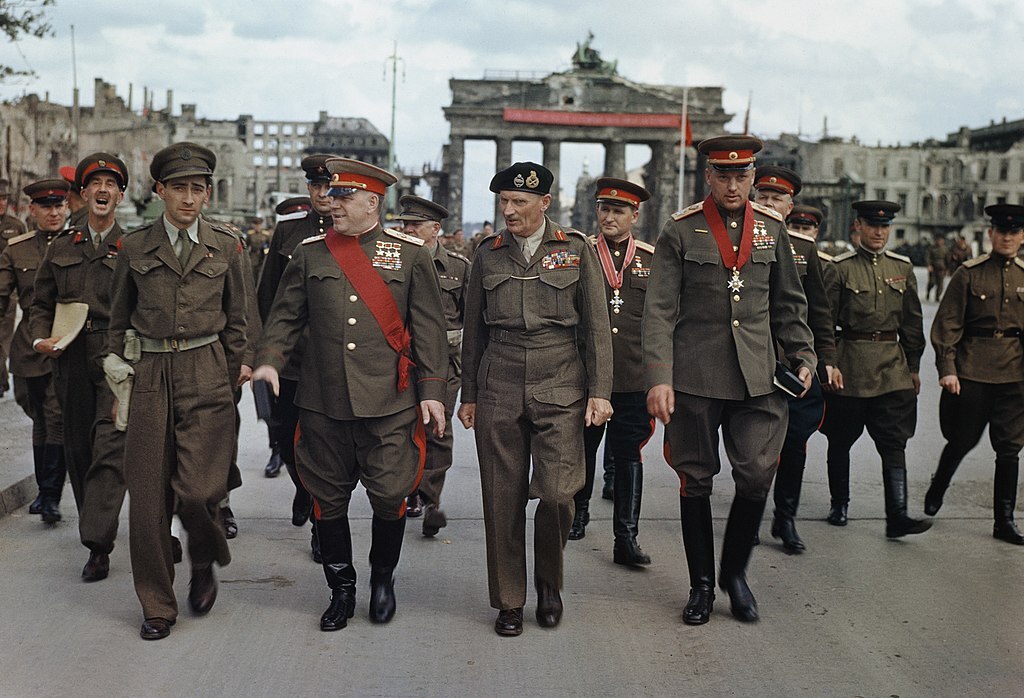
Bonus series: Georgy Zhukov
A series for Beyond Barbarossa patrons and supporters: a profile of Marshal Georgy Zhukov, the greatest general of the USSR in World War II.
Episode 6: Germany ... triumphant?
We focus on the progress of German Army Group Centre to Smolensk in July 1941.
This episode sponsored by The Eastern Front Trilogy, the true story of a Canadian drafted into the Red Army in World War II.
All proceeds from the sales of The Eastern Front Trilogy in paperback or its constituent e-books will go to helping Ukrainian refugees until all Ukrainians can return home safe from Russian military aggression.
Contact the author by email to contact@writtenword.ca
Support the podcast on Patreon.
Books cited in this episode:
David Glantz: Operation Barbarossa: Hitler's Invasion of Russia 1941. Stroud, Gloucetershire, UK, 2011.
David Stahel: Operation Barbarossa and Germany's Defeat in the East. Cambridge, UK: Cambridge University Press, 2009.
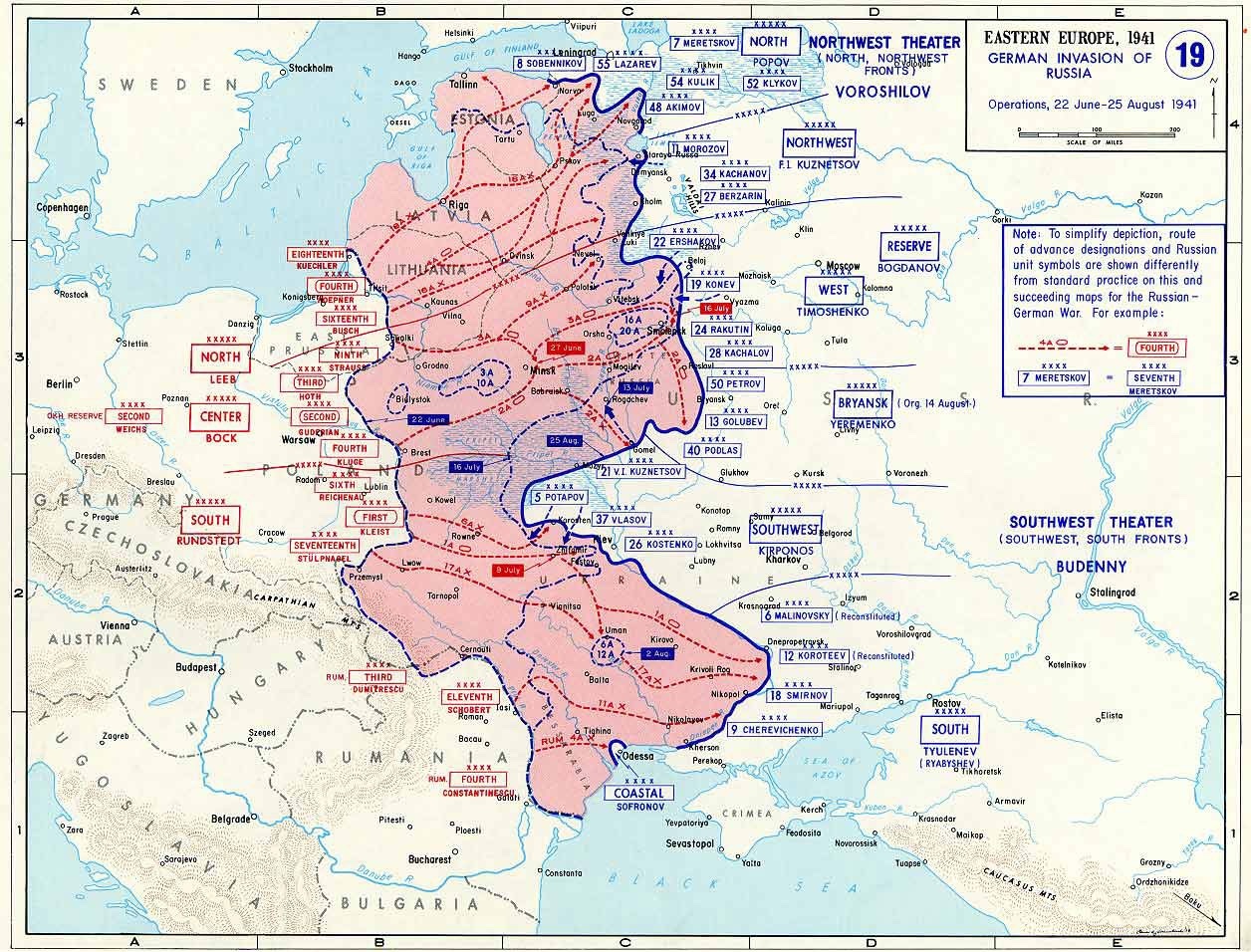
Map 1: the situation in the summer of 1941.
The pink area shows the depth of the invasion from June 22 to August 25. The dashed blue line through it shows the approximate position of the front line on July 16.
Note the encirclements at Bialystock, west of Minsk, at Smolensk, and in Ukraine, around Uman.
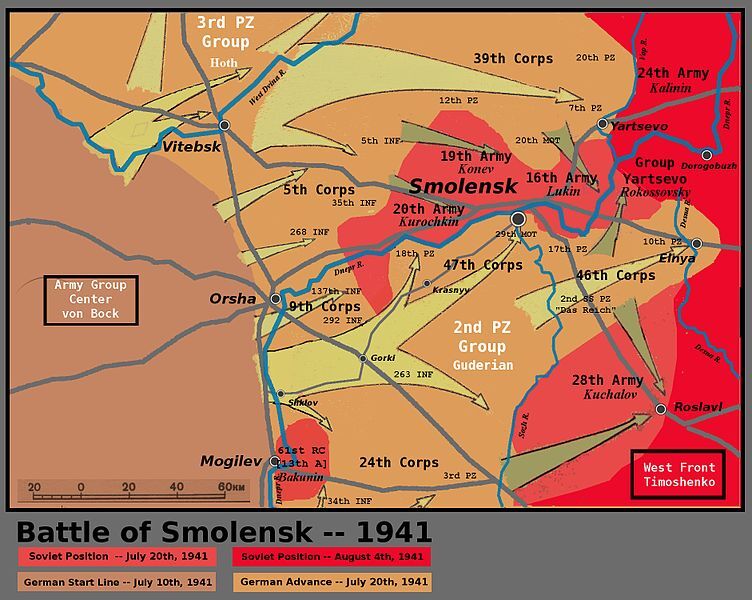
Map 2: The Battle of Smolensk
Guderian's salient is the deepest German penetration pictured here. Diagram by Livedawg via Wikimedia Commons.
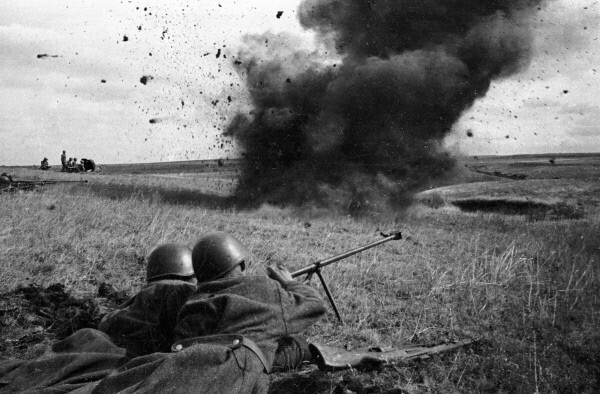
PTRD-41 anti-tank gun
Source: RIA Novosti archive, image #4408 / N. Bode / CC-BY-SA 3.0, via Wikimedia Commons.
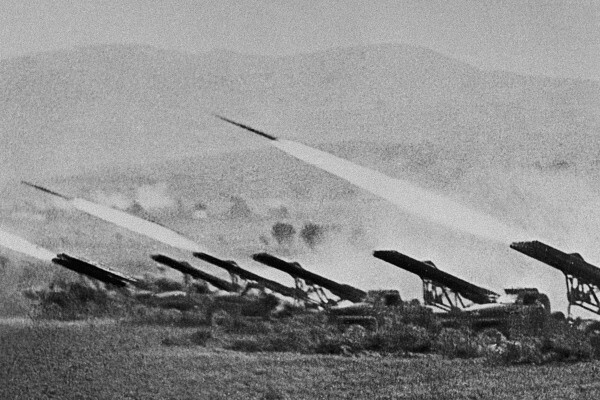
Stalin's organs: the Katyusha rocket launcher

Thank you for your support
I want to express my deep appreciation to all who supported Beyond Barbarossa in the start-up phase.
You can continue to support the costs of producing the podcast through Patreon.

Now available on Stitcher
In addition to the podcasting platforms across the header image, you can now also listen to Beyond Barbarossa on Stitcher.
Visit https://www.stitcher.com/show/beyond-barbarossa-eastern-front-of-world-war-ii.
From Blitzkrieg to Berlin
The eastern front was by far the largest part of the European theatre of World War Two. Yet compared to the Western Allies, there is little material available in English about the Soviets' fight. This podcast covers the history of the clash of two inimical tyrannies.
Music by Nicolas Bury
Sound effects obtained from https://www.zapsplat.com
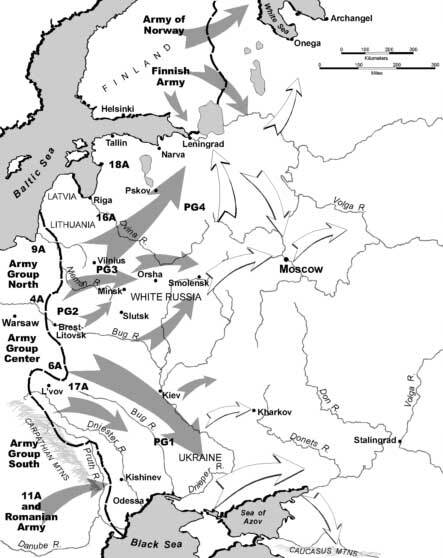
Operation Barbarossa: The plan
The German General Staff, OKW, planned Operation Barbarossa meticulously. The Wehrmacht, with support of the Luftwaffe, attacked in three main thrusts: Army Group North through the Baltic SSRs, Army Group Centre in two axes from the Bialystok Salient, that bulge just north of Brest-Litovsk, and Army Group South, into Ukraine.